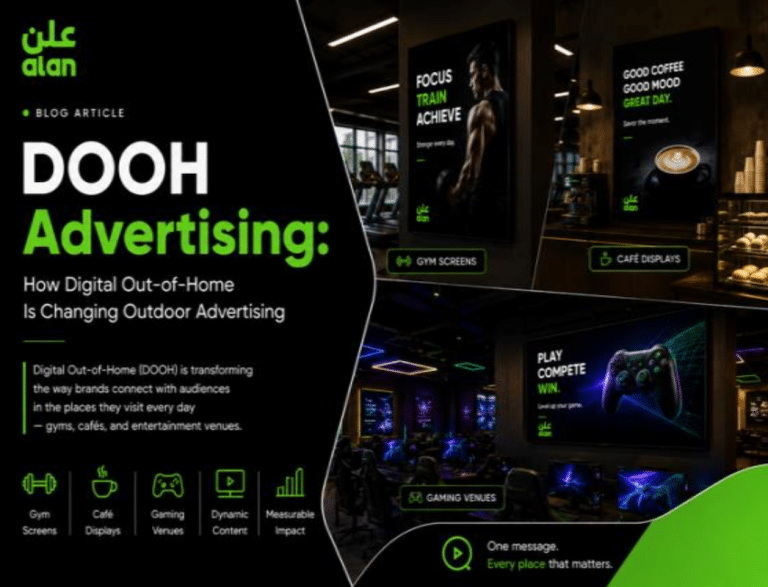
Outdoor advertising has long been one of the most visible ways for brands to reach people in public spaces. Today, digital technology is changing what outdoor advertising can do through (Digital Out-of-Home Advertising), also known as (DOOH Advertising).
From digital billboards on major roads to screens in malls, airports, retail spaces, and transportation hubs, (Digital Outdoor Advertising) gives brands a more flexible way to communicate with audiences outside their homes.
What Is DOOH Advertising?
(DOOH Advertising), short for (Digital Out-of-Home Advertising), refers to digital advertising displayed in public and commercial spaces outside the home.
Unlike traditional (Outdoor Advertising), which commonly relies on printed or static displays, DOOH uses digital screens that allow advertising content to be updated or changed without physically replacing the display.
Common examples include:
Digital billboards
Screens in shopping malls
Airport and transit displays
Digital screens in retail environments
Digital displays in public spaces
his flexibility is one of the main reasons (DOOH Advertising) has become an important part of modern advertising strategies.
What Makes DOOH Different?
The key difference between traditional (Outdoor Advertising) and (Digital Out-of-Home Advertising) is not simply that the screen is digital. DOOH can make outdoor advertising more dynamic and contextually relevant.
Depending on the technology and campaign setup, content can be scheduled or adapted according to factors such as time of day, location, weather, events, or audience data.For example, a restaurant could display a breakfast message in the morning and promote dinner later in the day. A retail brand could run different creative content depending on the location of the screen.
This allows advertisers to deliver messages that better match the environment in which people see them.
Why Do Brands Use DOOH Advertising?
One of the main advantages of (DOOH Advertising) is that it combines the physical visibility of outdoor media with some of the flexibility associated with digital advertising.
Brands can use different creatives and update campaigns more efficiently than with traditional printed placements. Some DOOH formats also support video, animation, dynamic content, and data-informed targeting.
(DOOH Marketing) can also work as part of a wider omnichannel strategy. A campaign seen on a digital billboard can share the same message and visual identity as social media, online advertising, and other channels, creating a more connected brand experience.
Can DOOH Advertising Be Measured?
Yes, but (DOOH Advertising) measurement works differently from online advertising.
Depending on the media owner, technology, and campaign, advertisers may use measures such as impressions, audience estimates, exposure data, and other campaign-specific metrics.
This is an important distinction: DOOH offers more measurement possibilities than traditional outdoor advertising, but it should not be treated exactly like a social media or website advertisement.
The Future of Digital Outdoor Advertising
(Digital Outdoor Advertising) is moving outdoor advertising beyond a fixed message on a billboard. Digital screens, dynamic creative, data integration, and programmatic buying are giving advertisers more options for planning and delivering outdoor campaigns.
The real value of (Digital Out-of-Home Advertising) is not simply replacing printed billboards with screens. It is using the flexibility of digital technology to make outdoor advertising more relevant to the right context, place, and moment.